
Speakers
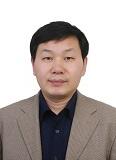
Prof. Wanyang Dai, Nanjing University, China
Research Area:
Blockchain Quantum Chip Quantum Cloud Computing, Reflection Diffusion Approximation of Random Networks
Speech Title:
Optimal policy computing for blockchained smart contracts via federated learning with applications in Metaverse, IoV & IoT
Abstract:
In this paper, we develop a blockchain based decision-making system via federated learning along with an evolving convolution neural net (CNN), which can be applied to assemble-to-order (ATO) oriented FinTech service systems, Metaverses, 6G/6G+ wireless communications, Internet of Vehicles (IoV), Internet of Energy (IoE), and general Internet of Things (IoT). The design and analysis of an optimal policy computing algorithm for smart contracts within the blockchain supported with cloud computing will be the focus. Inside the system, each order associated with a demand may simultaneously require multiple service items from different suppliers and the corresponding arrival rate may depend on blockchain history data represented by a long-range dependent stochastic process. The optimality of the computed dynamic policy on maximizing the expected infinite-horizon discounted profit is proved concerning both demand and supply rate controls with dynamic pricing and sequential packaging scheduling in an integrated fashion. Our policy is a pathwise oriented one and can be easily implemented online. The effectiveness of our optimal policy is supported by simulation comparisons.
Bio:
Wanyang Dai is a Distinguished Professor in Nanjing University, Chief Scientist in DepthsData Digital Economic Research Institute, and Chief Scientist in Su Xia Control Technology. He is the current President & CEO of U.S. based (Blockchain & Quantum-Computing) SIR Forum (Industrial 6.0 Forum), President of Jiangsu Probability & Statistical Society, Chairman of Jiangsu BigData-Blockchain and Smart Information Special Committee. He received his Ph.D. from Georgia Institute of Technology in USA. He was an MTS and principal investigator in U.S. based AT&T Bell Labs (currently Nokia Bell Labs) with some project won “Technology Transfer” now called cloud system. He published numerous influential papers in big name journals including Operations Research, Operational Research, Queueing Systems, Computers & Mathematics with Applications, Communications in Mathematical Sciences, and Journal of Computational and Applied Mathematics. He received various academic awards and has presented over 40 keynote/plenary speeches in IEEE/ACM, big data and cloud computing, quantum computing and communication technology, computational and applied mathematics, biomedical engineering, mathematics & statistics, and other international conferences. He has been serving as IEEE/ACM conference chairs, editors-in-chief and editorial board members for various international journals ranging from wireless communication, pure mathematics & statistics to their applications.
Research Area:
Artificial Intelligence, Wireless Sensors, IoT, Biomedical Imaging and Signals, Soft Computing, Machine Learning/ Deep Learning
Speech Title:
Machine Learning Application in Computer vision & Image Computing
Abstract:
Computer vision, the field concerning machines being able to understand images and videos, is one of the hottest topics in the tech industry. Image computing is a very beneficial technology, which is attracting attention of many industries in recent days. Image computing that uses machine learning appeared as an effort to mimic the human visual system as well as to automate the image analysis process. As the technology improved, elucidations for particular tasks commenced to appear. The hasty acceleration of computer vision and image processing is due to deep learning as well as due to the advent of open source projects and large image databases, which increased the usage for image processing tools. Now, many useful libraries and projects have been created that can help to solve various image processing problems with machine learning & deep learning as well as to improve the processing pipelines in the computer vision and image processing tasks. Robotics, self-driving cars, and facial recognition all rely on computer vision to work. At the core of computer vision is image recognition, the task of recognizing what an image represents. There are still many challenging problems to solve in computer vision. Nevertheless, deep learning methods are achieving state-of-the-art results on some specific problems.
Bio:
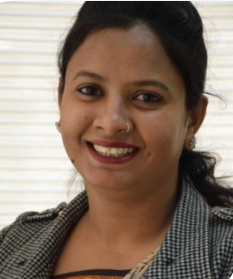
Deepika Koundal is currently associated with University of Petroleum and Energy Studies, Dehradun. She received the recognition and honorary membership from Neutrosophic Science Association from University of Mexico, USA. She is also selected as a Young scientist in 6th BRICS Conclave by NIAS-DST in 2021. She received the M.Tech. and Ph.D. degree in Computer Science & Engineering from the Panjab University, Chandigarh in 2015. She received the B. Tech. degree in computer science & engineering from Kurkushetra University, India. She is the awardee of research excellence award given by UPES in 2022 and Chitkara University in 2019. She has published approx.. 100 research articles in reputed SCI and Scopus indexed journals, conferences and two books. She is currently a guest editor in Computers & Electrical Engineering, Internet of Things Journals (Elsevier) and IEEE Transaction of Industrial Informatics, Computational and Mathematical Methods in Medicine, MDPI Sensor, Hindawi and CMC. She is also serving as Associate Editor in Heliyon, IET Image Processing and International Journal of Computer Applications. She also has served on many technical program committees as well as organizing committees and invited to give guest lectures and tutorials in Faculty development programs, international conferences and summer schools. Her areas of interest are Artificial Intelligence, Wireless Sensors, IoT, Biomedical Imaging and Signals, Soft Computing, Machine Learning/ Deep Learning. She has also served as reviewer in many repudiated journals of IEEE, Springer, Elsevier, IET, Hindawi, Wiley and Sage.

Dr. Deepak, Chongqing University of Posts and Telecommunications, Chongqing, China
Research Area:
Machine Learning, Deep Learning, Computer Vision, Artificial Intelligence
Speech Title:
Facial expression recognition using deep learning models
Abstract:
The face is one of the most powerful channels of nonverbal communication. Facial expression provides cues about emotion, intention, alertness, pain, personality, regulates interpersonal behavior, and communicates psychiatric and biomedical status among other functions. Within the past 15 years, there has been increasing interest in automated facial expression analysis within the computer vision and machine learning communities. This talk reviews fundamental approaches to facial measurement by behavioral scientists and current efforts in automated facial expression recognition. We consider challenges, review databases available to the research community, approaches to feature detection, tracking, and representation and the future work.
Bio: